GP makes batteries for pretty much everything: non-rechargeable cells for everyday devices, rechargeable NiMH batteries for anything reused often, and a line of accessories that includes power banks and head torches. Rapid stocks the core GP ranges for same-day despatch, with bulk pack sizes available for the high-turnover lines.
Non-rechargeable batteries: matching the chemistry to the device
For most devices, Super Alkaline and Ultra Alkaline are the default choice. Both are mercury-free alkaline manganese cells covering sizes from AAAA up to PP3, and they're built for the increasing power demand of modern electronics — torches, radios, toys, smoke alarms — rather than the low-drain gear alkaline batteries were originally designed around.
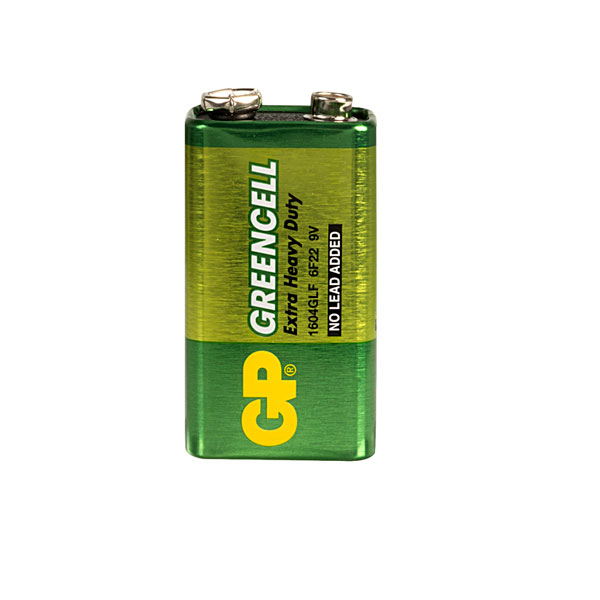
Greencell exists for the other end of that scale. It's a zinc chloride chemistry rather than alkaline, which makes it cheaper but weaker under sustained load, so it's the right call for devices that draw very little current and don't need much runtime, such as a wall clock or a basic remote control, and the wrong call for anything that'll drain a battery quickly.
Lithium coin cells solve a different problem again: shelf life rather than power. They're rated for around 10 years of storage thanks to a low self-discharge rate, and they operate across a wide -20°C to +60°C range, which is why they end up in watches, calculators and key fobs — devices that sit untouched for months at a time and need to still work when you pick them up.
Rechargeable batteries: the ReCyko family
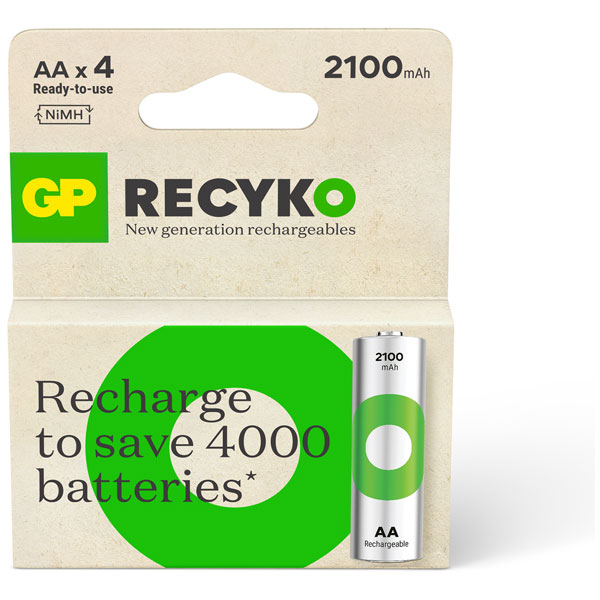
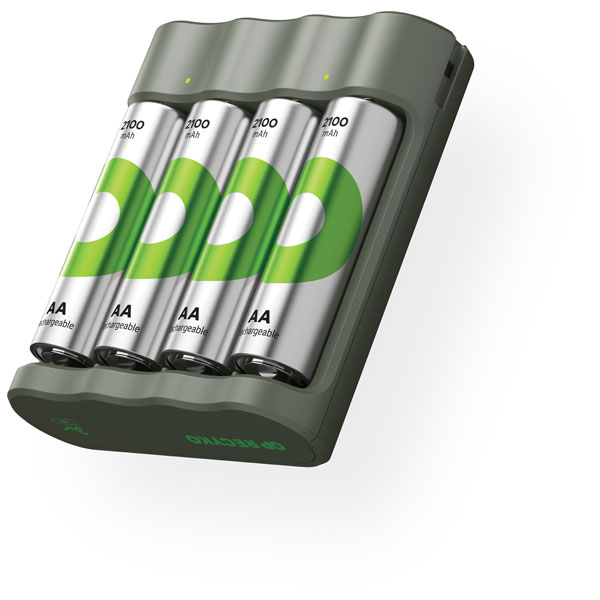
ReCyko is GP's answer to devices that go through batteries fast enough that disposables stop making sense. The standard NiMH range covers AA, AAA and C sizes with capacities from around 650mAh up to 3000mAh depending on the cell, and it's built for everyday reuse rather than any particular performance edge.
ReCyko Pro pushes further into higher-drain territory, such as digital cameras or anything that pulls current in bursts rather than a steady trickle, by holding its voltage more consistently under load than a standard alkaline or even a standard ReCyko cell would over the same discharge curve.
Charge 10 solves a different problem: waiting. It reaches full capacity in around 10 minutes rather than the hours a typical NiMH charge takes, and it's rated for roughly 700 charge cycles over its life. That's the one worth stocking if batteries get rotated constantly and nobody has time to leave a charger running overnight.
Beyond batteries: power banks and torches
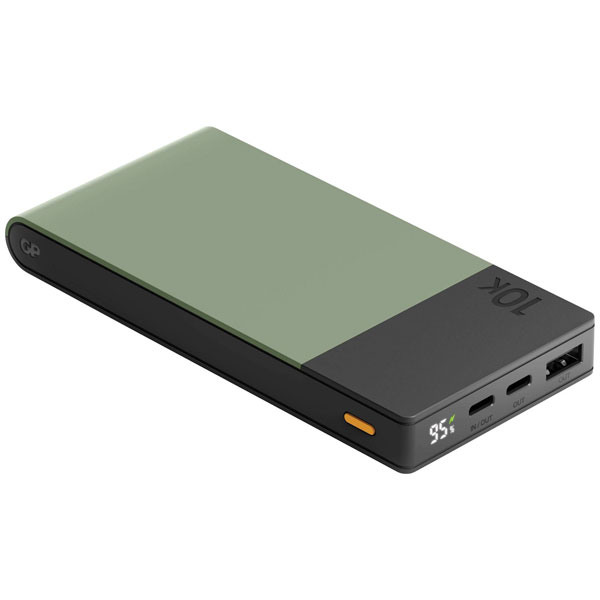
GP's M-Series power banks run from 5,000mAh up to 15,000mAh, with USB-A and USB-C outputs, built-in protection circuitry, and pass-through charging so the power bank and a connected device can charge at the same time. Capacity is really the only decision to make here: a 5,000mAh unit covers roughly two extra smartphone charges, while the 15,000mAh model stretches to around six, so the choice comes down to how long you're away from a socket rather than anything more technical.
The Discovery head torch takes a similar practical approach. A motion sensor turns it on and off without fumbling for a button, useful with gloves on or in the dark, and it's IPX4 water-resistant and ANSI FL1 approved for its impact and beam-distance claims. It runs on the same AA alkaline or NiMH rechargeable cells as the rest of the range, so there's no separate battery format to keep stock of.
Not sure which range fits your project? Speak to a specialist.
GP Batteries FAQs
What types of batteries does GP make?
GP produces non-rechargeable batteries across Super Alkaline, Ultra Alkaline, Greencell zinc chloride and lithium coin cell lines, plus rechargeable NiMH batteries under its ReCyko range. Rapid also stocks GP's wider accessory lines, including power banks and head torches.
What's the difference between GP's alkaline ranges?
Super Alkaline and Ultra Alkaline are GP's mainstream mercury-free options, covering sizes from AAAA to PP3 for everyday devices like torches, radios and clocks. Greencell is a cheaper zinc chloride alternative, better suited to low-drain devices such as remote controls rather than higher-drain electronics that need sustained power output.
How long do GP lithium coin cells last?
GP's lithium coin cells are rated for a shelf life of around 10 years thanks to a low self-discharge rate, alongside a wide -20°C to +60°C operating range. That combination makes them a reliable choice for devices that sit unused for long stretches, such as watches, calculators and miniature electronics.
What is GP ReCyko?
ReCyko is GP's rechargeable NiMH range, available in AA, AAA and C sizes with capacities from around 650mAh up to 3000mAh depending on the cell. The standard ReCyko line is aimed at everyday reuse, while ReCyko Pro is pitched at higher-drain devices needing more consistent output over repeated charge cycles.
How fast do GP's rechargeable batteries charge?
GP's Charge 10 range is built specifically for speed, reaching full capacity in around 10 minutes and rated for roughly 700 charge cycles over its lifetime. It's a different proposition to standard ReCyko cells, which charge more slowly but still deliver strong cycle life for everyday use.
Are GP rechargeable batteries suitable for high-drain devices?
Yes. ReCyko and ReCyko Pro NiMH batteries are aimed at high-drain devices like digital cameras, remote controls and toys, holding their voltage more consistently under sustained load than standard alkaline cells, which tend to drop off faster in the same devices.
Does GP make anything beyond batteries?
Yes. GP's accessory lines include M-Series power banks, ranging from 5,000mAh to 15,000mAh with USB-A and USB-C outputs and pass-through charging, and Discovery head torches with motion-sensor controls and IPX4 water resistance.


 {{SessionBasket.ItemCount }}