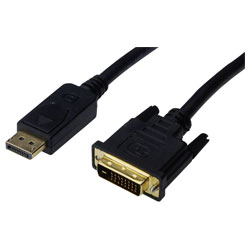
HDMI, DisplayPort or VGA: which display cable?
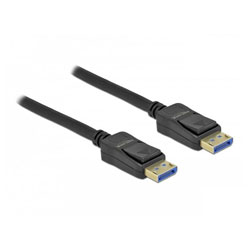
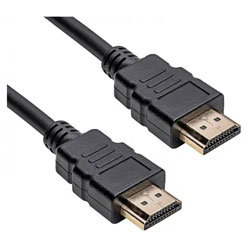
Start with the ports you've got. HDMI cables are the universal choice for TVs, projectors and most monitors, and they carry sound as well as picture. The rating on the cable matters more than the brand: Premium High Speed handles 4K at 60Hz, while Ultra High Speed is what you need for 4K at 120Hz or 8K. DisplayPort cables are the PC monitor specialist. They support high refresh rates, latch into the port so they don't work loose, and can daisy-chain several compatible monitors from a single output, which is handy on a multi-screen desk.
Older classroom projectors and monitors often still use VGA or DVI, and our VGA and DVI cables keep them working without replacing the kit.
Choosing an Ethernet cable: Cat5e, Cat6 or Cat6a?
The category number tells you how fast an Ethernet cable can run, and over what distance. Cat5e handles gigabit networking up to 100 metres, which covers most desks and home offices. Cat6 adds headroom and can carry 10 gigabit over shorter runs of around 55 metres. Cat6a carries 10 gigabit over the full 100 metres, so it's the sensible choice for new installations you want to last. Our network and patch cables include low smoke zero halogen (LSZH) Cat6a leads, well suited to schools and public buildings. When wiring your own plugs, follow our T568A and T568B colour codes so both ends match.
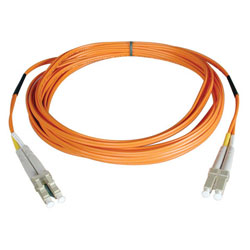
Need to go further than 100 metres, link two buildings or run past heavy electrical equipment? That's where fibre cables take over. They aren't affected by electrical interference, and with the right switch transceivers they carry gigabit and faster connections far beyond the limit of copper.
USB cables: the connector is only half the story
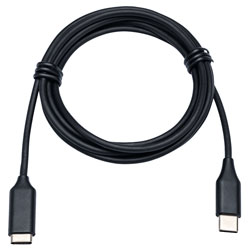
Most USB cables are named by their ends. USB-B is the square plug still found on printers, scanners and lab instruments, and USB-C is the reversible plug on almost everything new. What the cable can actually do depends on its USB version. USB 2.0 tops out at 480Mb/s, while USB 3 cables start at 5Gb/s, which makes a real difference when moving large files to and from an external drive.
USB-C needs a closer look, because two cables that look identical can behave very differently. Some only charge, some carry data at USB 2.0 speed, and only certain cables carry video. For power, a standard USB-C cable handles up to 60W, while laptops that charge at 100W or more need a cable rated at 5A.
Power, storage and serial cables
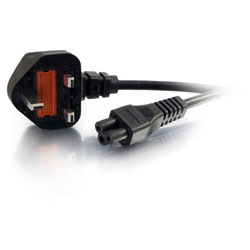
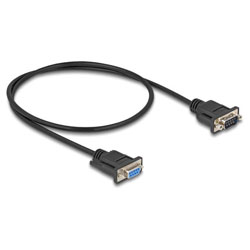
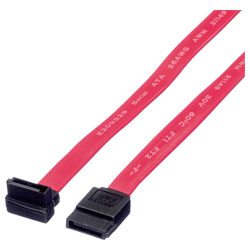
Most desktop PCs and monitors take a C13 lead, often called a kettle lead. Laptop power supplies usually use the three-pin C5 cloverleaf and smaller devices the two-pin C7 figure-of-eight, so check the inlet before ordering power cables. Inside the case, SATA drives need two separate connections, a thin data cable and a wider power cable, and our storage cables and adapters include SATA-to-USB options for recovering data from a drive outside its computer. For industrial controllers, test equipment and network switch console ports, RS-232 is still very much in use, and our serial cables keep that kit connected.
Buying computer cables
Do gold-plated or expensive HDMI cables give a better picture?
No. HDMI is digital, so paying more doesn't sharpen the image. What matters is that the cable is certified for the bandwidth your devices need. Gold plating mainly resists corrosion.
How long can an HDMI or USB cable be?
For 4K, standard HDMI cables are most reliable up to around five metres. Beyond that, an active or fibre optic HDMI cable holds the signal over much longer runs. USB 2.0 is designed for up to five metres, and faster USB versions for shorter lengths, so use an active extension cable if you need more reach.
Is Cat7 better than Cat6a?
Not for most networks. Cat7 cable is heavily shielded, but it's usually fitted with standard RJ45 plugs, which aren't part of the Cat7 standard and hold it back to Cat6a performance. Cat6a gives you 10 gigabit over 100 metres with standard, widely supported parts.
Do I need shielded network cable?
Only where there's electrical noise. Unshielded (UTP) cable is fine in most offices and classrooms. Shielded cable is worth it near motors, lift shafts, fluorescent lighting or industrial machinery, as long as it's earthed properly at the patch panel. See why cable shielding matters.
Can Rapid supply cables in bulk for a school or office rollout?
Yes. We supply schools, colleges and businesses across the UK, and can help you work out the cable types, lengths and quantities for a refurbishment, a new IT suite or a full network installation.

 {{SessionBasket.ItemCount }}